Michelle and Barack Obama: What Respect Looked Like When Marriage Got Hard
Michelle Obama has spoken candidly about resentment, parenting, and the work of marriage. Her story with Barack offers a look at why respect must show up in everyday life.
Michelle Obama did not pretend she enjoyed every season of her marriage. In a 2022 conversation, she described a long stretch of frustration during the years when their daughters were young. The admission surprised people accustomed to seeing a smiling, admired couple. It was also recognizably ordinary: two people trying to raise children, work, and remain connected while their responsibilities competed for attention.
Their story is not interesting because the difficulty disappeared. It is interesting because Michelle was willing to name it. A marriage can look affectionate in public while holding private exhaustion. The affection does not make the exhaustion imaginary.
Beyond the photograph
Michelle and Barack met as young lawyers in Chicago in 1989 and married in 1992. In her account of their early relationship, she described a connection that grew beyond first impressions. They built a family and eventually lived under a level of public scrutiny few couples experience.

But the part of her story that may feel familiar has little to do with the White House. It is the emotional weight of keeping a household going: remembering plans, anticipating needs, making room for work, and having enough attention left for the person beside you.
When that work is uneven, even a loving couple can become resentful. One person may feel busy; the other may feel that their own busyness is invisible. The disagreement then becomes larger than a missed task. It becomes a question of whether both lives are being taken seriously.
We cannot inventory their private household or reconstruct every argument. Michelle’s public account gives us something more useful than speculation: permission to talk about the difficult parts without treating them as evidence that all affection has vanished.
Respect is visible in the response
When someone tells a partner that they are struggling, the next response matters. Does the conversation become a contest over who has it harder? Does the person speaking have to prove their pain before it receives attention? Or is there room to hear the complaint as information about the shared life?
Those questions are our reflection on the story, not a transcript of an Obama argument. They help make respect concrete. It can look like listening without preparing a defense. It can look like naming a problem accurately, returning to a conversation, or changing a routine that has become unfair.
Respect does not mean agreeing with everything a partner says. It means believing that their experience deserves a hearing. Love may explain why two people want to remain together. Respect affects what it feels like to remain together.
The familiar sentence “You know I love you” can be comforting. It can also leave the actual problem untouched. If a partner is asking for help with a shared responsibility, a declaration of affection may need to be followed by something practical.
A conversation with someone outside the marriage
Michelle has also discussed couples therapy. In a 2020 interview with Oprah, she described the value of being heard by an objective person and reflecting on her own needs. She said that developing a clearer life of her own helped her participate more fully in the partnership. In the same conversation, she spoke of continuing to value, respect, and trust Barack.

There are two thoughts here that are worth holding together. A partner has responsibilities in a relationship. A person also needs room to understand and pursue their own happiness. One truth does not cancel the other.
It would be unfair to turn Michelle’s reflection into a message that an unhappy person should simply improve their attitude. It is equally incomplete to imagine that marriage requires a partner to become the sole source of another person’s identity, purpose, and satisfaction.
An equal partnership needs two people whose needs count. It also needs enough independence for each person to remain more than the role they perform for the other.
The ordinary boundary of dinner
In a 2018 interview about Becoming, Michelle described keeping family dinner as a priority during the presidency. The demands of the office were enormous, yet time with the children still mattered.
It is a useful example because it is so concrete. Respect can sound abstract until it becomes an entry in a calendar, a protected hour, or an agreement that someone follows. A shared meal does not solve every disagreement, but making time for a family says that the relationship has a place in the day.
For a couple outside the public eye, the equivalent might be a regular check-in after work, a fair arrangement around caregiving, or time that is not continually surrendered to whichever person’s job feels most urgent. What matters is whether the agreement is meaningful to both people.
No one can guarantee an effortless season. Two people can decide that when life gets complicated, their connection will not depend entirely on leftover time.
Difficulty is not the same as disrespect
Barack has described difficult periods too. Reflecting on their years in the White House, he emphasized conversation, respect, and their children. These are his public reflections, not proof that every exchange between them was patient or fair.
That distinction keeps the story useful. A couple can be irritated, disappointed, or temporarily out of step while still approaching each other with care. A relationship can also contain persistent dismissal or dishonesty that is explained away as an ordinary rough patch.
The difference is not simply how long someone stays. It is what happens when a problem is named. Is there room for a real response? Are promises followed by behavior? Can both people speak without being diminished?
Michelle’s story should never become a demand that someone endure a fixed number of unhappy years. Her assessment of her own marriage belongs to her. It does not decide what another person should accept.
What their story offers us
We often praise a relationship by calling it strong. Michelle’s candor invites a more precise question: strong in what way? Strong enough to admit frustration? Strong enough to ask for help? Strong enough to make room for a partner whose needs have changed?
Those kinds of strength are less photogenic than a romantic gesture. They may be more useful in the kitchen on an ordinary evening when both people are tired.
You do not need a famous couple to know that affection matters. What their public accounts add is a reminder that affection and effort can exist together. A love story can include a complaint, a difficult conversation, and the work of making a life fairer.
Think about a relationship in your own life. Where is love easy to express? Where would respect become more visible through a practical change?
Read Why Respect Is More Important Than Love in a Healthy Relationship (6 Signs of Respectful Love) for a closer look at the everyday behaviors that make care feel real.

Editorial Notes:
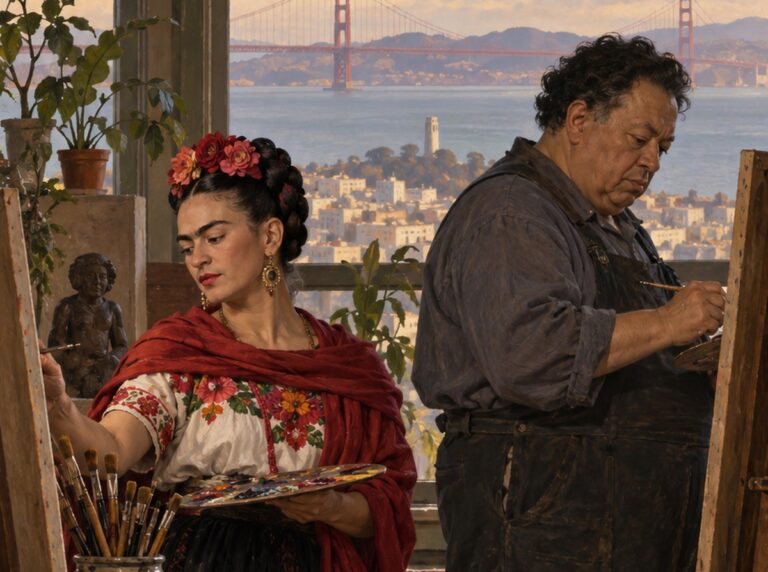
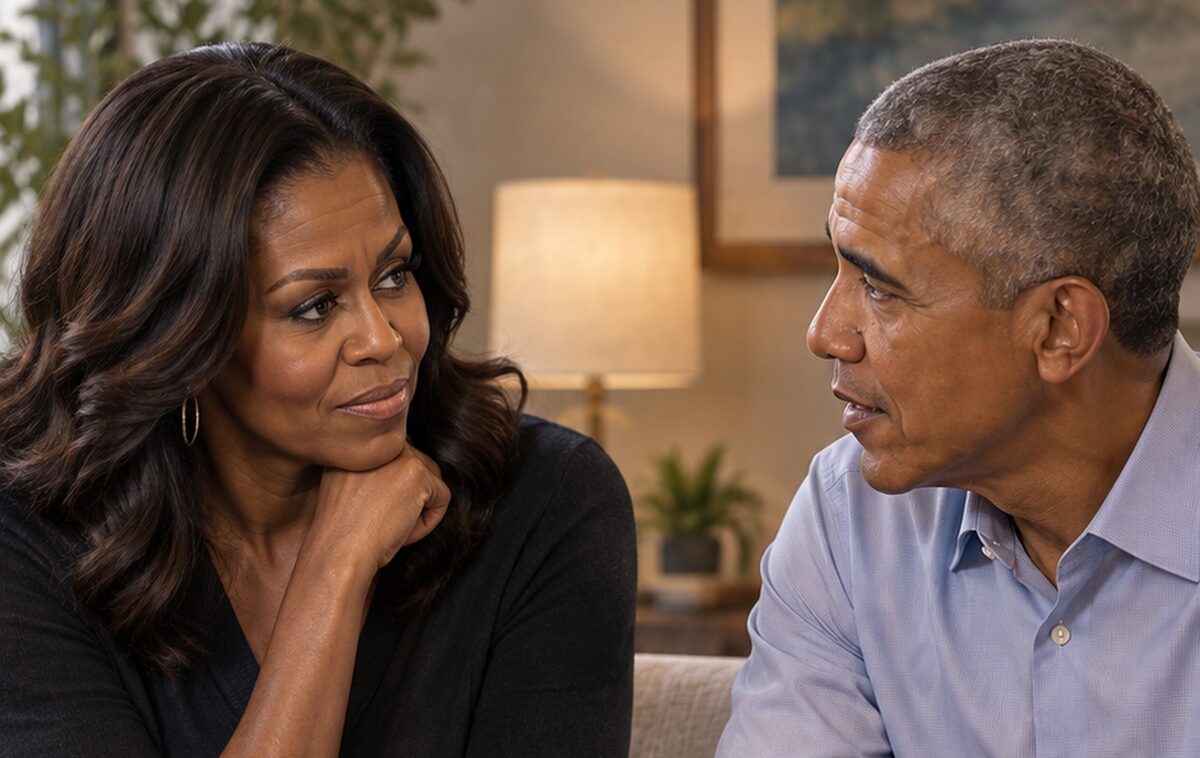
Illustrations are imaginative interpretations of the people and periods in this story, not records of private conversations. Reflections about relationship behavior are editorial observations, not claims about undisclosed events in their marriage. Sources: