

Lucille Ball Loved Desi Arnaz. Then She Chose to Leave.
A true story about loving someone deeply—and finally accepting that love was not enough to make the marriage work.
On the last night they worked together as husband and wife, millions of people saw only the kiss. Lucille Ball and Desi Arnaz were filming the final episode of The Lucille Ball–Desi Arnaz Show. To the public, they were still America’s favorite television couple: the red-haired comedian and the charismatic Cuban bandleader whose affection seemed to sparkle through every scene.
The cameras were rolling. The familiar sets were in place. Lucy and Desi performed the moment the script required. Then they kissed.
What viewers could not see was that their marriage was ending. The feeling between them had not simply vanished. That was what made leaving so painful. Lucille Ball was not walking away because nothing remained. She was walking away because love, by itself, could no longer repair what their life together had become.

The man who changed the temperature of the room
They met in 1940 while working on the musical film Too Many Girls. Ball was an established actress in her late twenties. Arnaz was a 23-year-old musician and performer whose family had fled political upheaval in Cuba. Their attraction was immediate. Ball later remembered seeing him after he had changed out of a character costume and being startled by the transformation. The romance moved quickly. They eloped in November 1940, only months after meeting.
From the beginning, their temperaments and schedules made life complicated. Arnaz toured with his orchestra while Ball worked in Hollywood. Distance fed suspicion and arguments. In 1944, only four years into the marriage, Ball filed for divorce, but she did not follow through.
They reconciled, still pulled toward one another by a connection neither seemed ready to surrender. It would not be the last time hope persuaded them to try again.
The marriage became the show
By 1950, Ball had found success on radio in My Favorite Husband. When CBS considered adapting it for television, she insisted that Arnaz play her on-screen husband. Network executives doubted that American audiences would accept a red-haired American woman married to a Cuban bandleader. Ball and Arnaz responded by taking a vaudeville act on the road. Audiences loved them! The performance helped demonstrate that their partnership could work on television.
I Love Lucy premiered in October 1951. The series became a phenomenon, but its success was not accidental. Ball was a meticulous performer with extraordinary comic instincts. Arnaz was a gifted producer who helped establish production practices that influenced television for decades. Together they formed Desilu Productions, filmed the show before a live audience and preserved it on high-quality film—one reason later generations could continue watching it.
They were not merely starring in a hit. They were building something new. And for a while, the work may have given their marriage a shared direction. On screen, problems were solved within half an hour. Lucy and Ricky argued, schemed, misunderstood each other and came back together before the credits. Real life did not resolve itself so neatly.
What the audience could not see
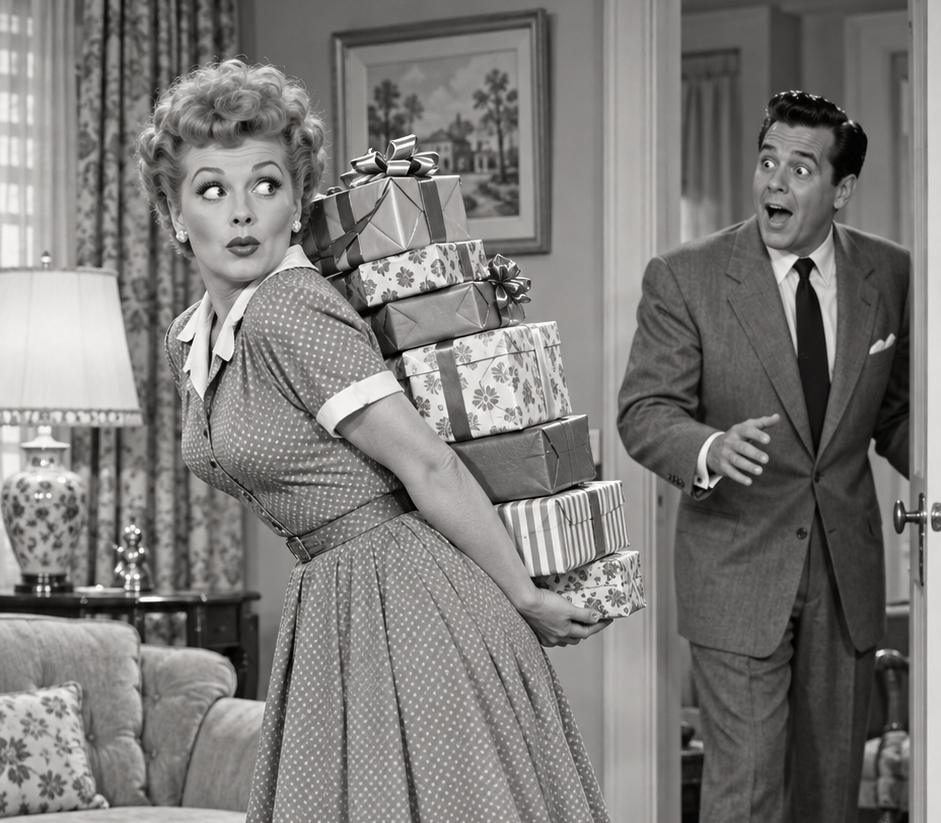
Behind the laughter were patterns that had troubled the marriage for years. Accounts by Ball, Arnaz, their daughter Lucie and later biographers describe Arnaz’s heavy drinking and repeated sexual infidelity. Their daughter has emphasized that her father loved her mother, even while acknowledging the behavior that caused lasting damage. That contradiction matters.
It would be easier to retell their story if one person had felt nothing or if the marriage had contained no joy. But people can be talented, loving and destructive at the same time. A relationship can contain genuine devotion and still become impossible to live inside.
Ball had already shown how difficult it was for her to give up. She had filed for divorce once and returned. She helped build a television series partly because working together might keep them physically close. She shared children, a company, a public identity and an extraordinary creative achievement with Arnaz.
Leaving him did not mean leaving only a husband. It meant disrupting an entire world they had constructed together. So she stayed until staying required too much.
The moment love stopped being the deciding question
In early 1960, after nearly twenty years of marriage, Ball filed for divorce again. This time, she continued to the end. The legal language described their home life as unhappy and routine. In later recollections, Ball was far more direct about the drinking and women that had worn the marriage down.
She was 48 years old. Her identity was intertwined with Arnaz’s in the minds of millions. Their children were still young. Their names were joined in the company they owned and in one of the most successful programs television had ever produced. It would have been understandable to tell herself that too much had been invested to leave.
Instead, she accepted something more difficult: history together was not proof that the future together would be healthy. Their divorce became final in May 1960. Ball reportedly broke down while filming their final embrace. The emotion did not invalidate her decision. It revealed its cost.
Choosing yourself does not always arrive as a triumphant door slam. Sometimes it looks like grieving someone you still love while refusing to return to the life that hurt you.
She did not disappear when the marriage ended
There is another reason Ball’s story remains powerful. Divorce was not the final chapter of her public or private life. In 1961, she married comedian Gary Morton. Their marriage lasted until her death in 1989. It was a different partnership—less mythologized, perhaps, but steadier.
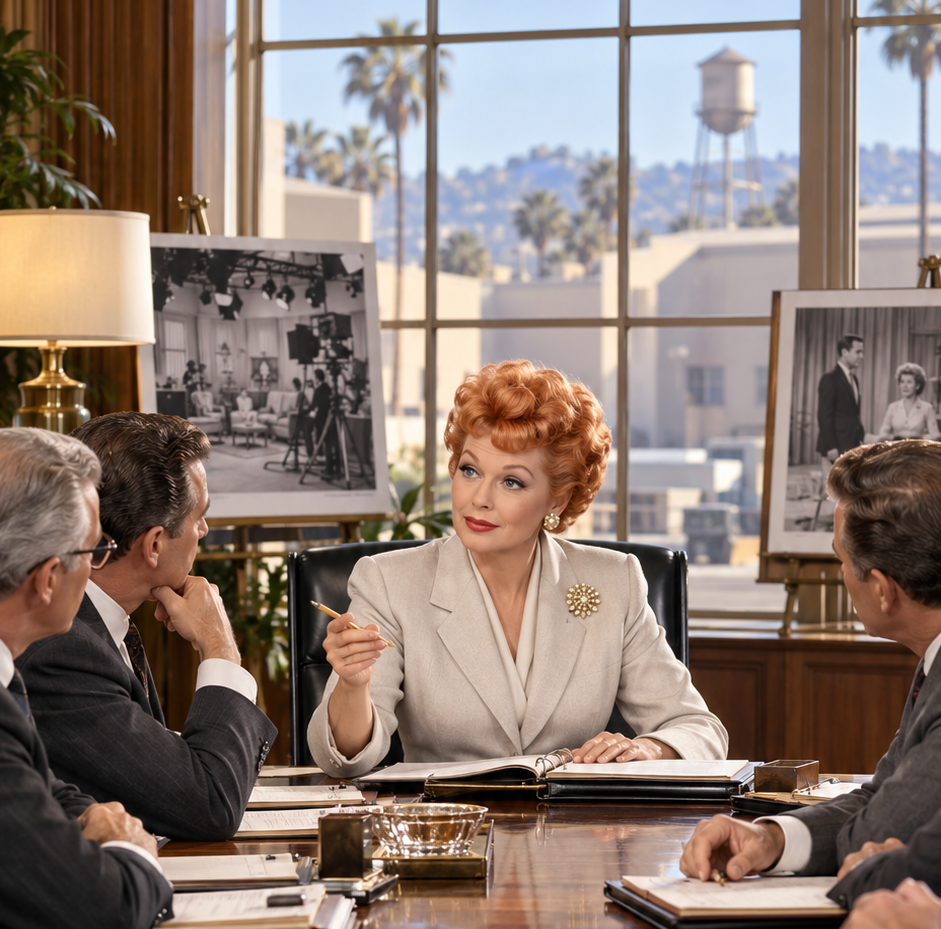
Her professional life also expanded. In 1962, Ball bought Arnaz’s interest in Desilu and became the first woman to preside over a major Hollywood studio. Under her leadership, the company developed or produced influential programs including Star Trek, Mission: Impossible and Mannix.
The woman audiences associated with comic chaos was, away from the camera, making consequential business decisions in an industry controlled overwhelmingly by men.
She had not lost the life she built with Arnaz. She had claimed her part of it and carried it forward.
Love changed its form
Divorce did not turn Ball and Arnaz into strangers. They remained connected through their children, their work and the history they alone fully understood. Both remarried. Both built separate lives. Yet people close to them described an affection that endured.
Their daughter Lucie has recalled their final telephone conversation in 1986, when Arnaz was gravely ill. Ball told him she loved him repeatedly. He answered that he loved her too. The call took place near what would have been their wedding anniversary.
Arnaz died shortly afterward. The tenderness of that ending can tempt us to rewrite the divorce as a mistake. But continued love does not prove that two people should have remained married. Sometimes affection survives precisely because the daily conflict has ended. Sometimes distance allows people to honor what was beautiful without continually reenacting what was painful.
Ball did not have to deny that Arnaz mattered. She did not have to erase the work they created, the children they loved or the electricity that first drew them together.
She only had to stop confusing enduring love with an obligation to endure the marriage.

What Lucille Ball’s choice can teach us
Many people wait for certainty before leaving a relationship. They imagine clarity will arrive when love is completely gone, but clarity may sound different:
I love this person, and I cannot keep living this way.
That sentence holds two truths at once. It does not require turning a former partner into a monster or pretending the good years were false. It simply recognizes that love is one part of a workable relationship—not a substitute for trust, stability, respect and change.
Lucille Ball and Desi Arnaz accomplished remarkable things together. They also reached a point at which the relationship that looked magical to the world had become painful in private.
Ball’s choice was not evidence that she had never loved him. It was evidence that she finally understood love was no longer the only question she needed to ask.
Sometimes choosing yourself means leaving someone you still love. And sometimes the most honest way to preserve what was real is to stop asking it to become what it can no longer be.
A note about this true love story
This article retells documented events from the public lives of Lucille Ball and Desi Arnaz. Dialogue and private thoughts have not been invented. Some intimate details come from later family recollections and biographies and are identified as such in the accompanying source notes.
Further Reading
Want to learn more about overthinking, self-awareness, emotional regulation, and taking meaningful action? Explore these articles and discover new perspectives.
- Can You Love Someone and Still Know They Are Wrong for You?
- Why We Sometimes Push Away the People We Love Most
- What It REALLY Means to Protect Your Peace
- Why We Misunderstand Each Other So Easily
- 12 Quotes About Listening to Yourself and Discovering What Your Heart Already Knows
- How Do You Know Whether It’s Time to Listen, Work, or Act?
Begin Your Journey of Reflection and Living Powerfully
Receive a free reflection guide to help you better understand yourself, your relationships, and the paths that shape your life.