

When Life Hasn’t Turned Out the Way You Hoped: 5 Books for Finding Peace, Purpose, and Possibility
There comes a moment in many of our lives when we look around and realize that things haven’t turned out quite the way we imagined.
Perhaps the relationship we hoped would last didn’t. The career we worked so hard to build hasn’t brought the fulfillment we expected. Our family looks different than we envisioned. Financial limitations have kept certain dreams out of reach, or the opportunities we thought would come never arrived.
Sometimes, the hardest losses are the ones that are difficult to explain to others. We’re grieving something that never happened, a version of our lives that existed only in our hopes and imagination.
We can be grateful for what we have and still feel sadness about what we don’t. We can appreciate the people in our lives and still long for deeper connections. We can recognize our accomplishments and still wish we’d gone further.
These feelings aren’t necessarily contradictory. They’re part of being human.
Finding peace with the life we have doesn’t require us to stop dreaming about the life we want. It does, however, invite us to reconsider where we find meaning, how we measure success, and what possibilities we might have overlooked.
The following five books offer thoughtful perspectives on navigating disappointment, accepting life’s limitations, rediscovering purpose, and remaining open to possibility.
Our Top Picks at a Glance
Affiliate disclosure: As an Amazon Associate I earn from qualifying purchases. If you purchase a book through one of our links, Pathways of Love may earn a commission at no additional cost to you.
| Book | Author | Best For |
|---|---|---|
| Bittersweet | Susan Cain | Making peace with sorrow and longing |
| Wintering | Katherine May | Navigating difficult seasons of life |
| Finding Meaning in the Second Half of Life | James Hollis | Rediscovering identity and purpose |
| Four Thousand Weeks | Oliver Burkeman | Accepting life’s limitations |
| Man’s Search for Meaning | Viktor E. Frankl | Finding meaning in difficult circumstances |
1. Bittersweet: How Sorrow and Longing Make Us Whole
By Susan Cain
Best for: Those who feel the weight of unfulfilled dreams, lingering sadness, or a longing for something more.
We live in a culture that often treats happiness as an achievement and sadness as something to overcome. When we’re disappointed with life, we may feel additional pressure to change our attitude, practice gratitude, or focus on the positive.
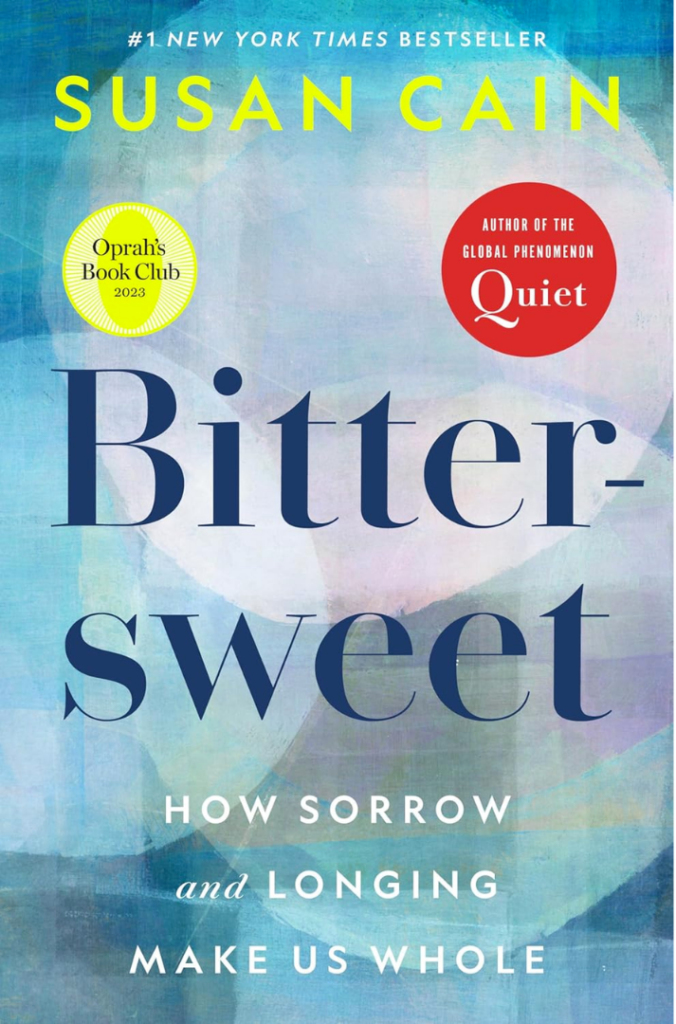
Susan Cain offers a different perspective.
In Bittersweet, Cain explores the relationship between sorrow, longing, beauty, creativity, and human connection. Rather than presenting sadness as the opposite of a meaningful life, she examines how our awareness of life’s impermanence can deepen our appreciation of it.
The things we long for often reveal something important about us. Our sadness about a relationship may reflect our capacity for love. Our disappointment about an unrealized dream may reflect our desire to create, contribute, or experience something meaningful.
Cain invites readers to explore these feelings rather than automatically trying to escape them.
Why We Recommend It
Bittersweet is particularly valuable for readers who are tired of being told to look on the bright side.
It offers a compassionate perspective on the complexity of human emotions and reminds us that a meaningful life doesn’t have to be a consistently happy one.
- It makes room for grief without demanding immediate optimism.
- It explores how longing can connect us to beauty, creativity, and other people.
- It offers an alternative to the pressure to maintain a positive outlook.
- It encourages us to recognize the richness of our emotional lives.
Something to Consider
This book is more reflective than instructional. Readers looking for a structured plan to change their circumstances may find it less practical than traditional self-help books.
Its strength lies in helping us understand and relate differently to our emotional experiences.
2. Wintering: The Power of Rest and Retreat in Difficult Times
By Katherine May
Best for: Those experiencing stagnation, uncertainty, exhaustion, or a difficult transition.
Not every season of life is filled with growth and achievement.
Sometimes, despite our efforts, life seems to slow down. Opportunities disappear. Relationships change. Our energy diminishes, or circumstances require us to spend more time maintaining what we have than building something new.
These periods can be particularly difficult when we’re accustomed to measuring our lives through progress.
In Wintering, Katherine May uses the metaphor of winter to explore the quieter and more challenging seasons of human existence.
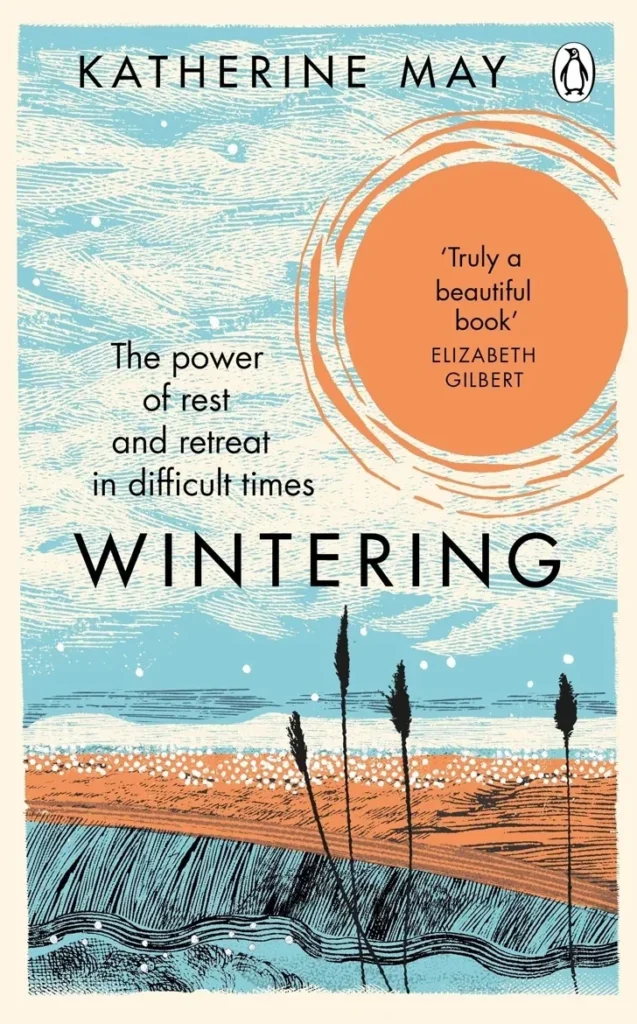
Drawing on personal experiences and observations of the natural world, she considers how rest, retreat, and adjustment can help us navigate periods when our usual ways of living no longer serve us.
Nature doesn’t expect constant growth. There are seasons of abundance and seasons of conservation. May invites us to consider whether our own lives might benefit from a similar understanding.
Why We Recommend It
Wintering offers a refreshing alternative to the expectation that we should always be moving forward.
It acknowledges that there are times when caring for ourselves, conserving our energy, and maintaining our lives are meaningful activities in their own right.
- It encourages patience during periods of uncertainty.
- It challenges the idea that our worth depends on productivity.
- It offers a gentler perspective on rest and retreat.
- It helps us recognize the natural rhythms of change.
Something to Consider
Wintering is a literary and personal exploration rather than a step-by-step guide.
Its emphasis on slowing down may also be challenging for readers who feel an urgent need to change their circumstances. Rest can be valuable, but it doesn’t necessarily resolve the practical problems that contribute to our distress.
3. Finding Meaning in the Second Half of Life: How to Finally, Really Grow Up
By James Hollis
Best for: Those questioning their identity, direction, accomplishments, or purpose, particularly in midlife and beyond.
Many of us spend the first part of our lives building something.
We pursue an education, establish careers, develop relationships, raise families, and work toward financial security. We make decisions based on our responsibilities, cultural expectations, and ideas about what a successful life should look like.
But what happens when we’ve spent years building a life and begin to wonder whether it truly reflects who we are?
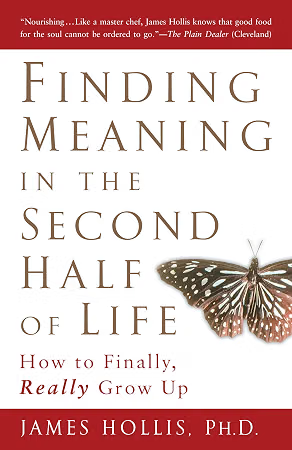
In Finding Meaning in the Second Half of Life, Jungian analyst James Hollis explores the psychological journey that often emerges as we mature.
He invites readers to examine the expectations, fears, and unconscious patterns that have influenced their choices. He also considers how dissatisfaction can prompt us to ask deeper questions about who we are and how we want to live.
The second half of life, in this perspective, isn’t simply about accepting decline. It can be an opportunity to develop a more authentic relationship with ourselves.
Why We Recommend It
This book is especially meaningful for people who have accomplished many of the things they were supposed to accomplish but still feel that something important is missing.
Rather than offering another formula for success, Hollis encourages us to investigate what success and fulfillment actually mean to us.
- It explores the distinction between external success and inner fulfillment.
- It encourages examination of inherited expectations and beliefs.
- It treats midlife questioning as a potential opportunity for psychological growth.
- It invites us to consider what an authentic life might look like.
Something to Consider
Hollis writes from a Jungian psychological perspective, and his work can be intellectually demanding.
This is a book that may be best read slowly, with time for reflection. It also doesn’t offer simple solutions to the financial, professional, or family responsibilities that can limit our choices.
Its value is in helping us ask better questions about the lives we’re living.
4. Four Thousand Weeks: Time Management for Mortals
By Oliver Burkeman
Best for: Those struggling with the passage of time, unrealized ambitions, and the feeling that they’re falling behind in life.
Have you ever felt that your real life is waiting somewhere in the future?
Perhaps once you’ve earned enough money, found the right partner, changed careers, finished a project, or resolved a difficult situation, you’ll finally be able to live the way you want.
But as one challenge is resolved, another often appears. Years pass, and we may discover that we’ve spent much of our lives preparing for a future that remains just beyond our reach.
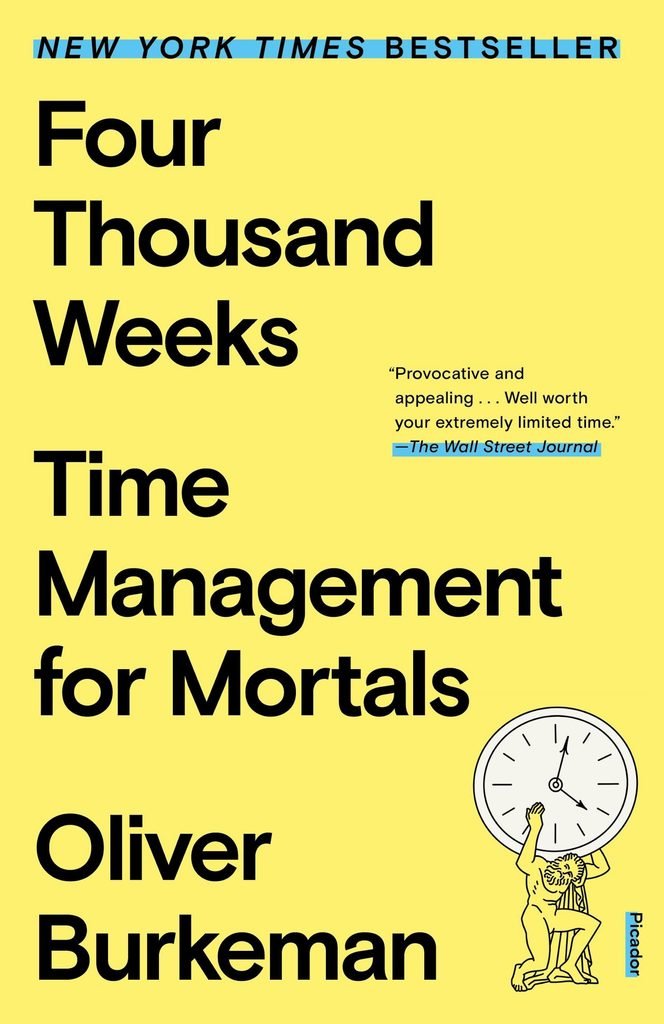
In Four Thousand Weeks, Oliver Burkeman confronts a fundamental reality of human existence: our time is limited.
Rather than offering strategies for accomplishing everything, he challenges the assumption that accomplishing everything is possible or even desirable.
Burkeman explores how accepting our limitations can help us make more intentional choices about what deserves our time and attention.
Why We Recommend It
This book offers a valuable perspective for anyone who feels haunted by the distance between their ambitions and their accomplishments.
It encourages us to question whether we’re constantly postponing the experience of living in pursuit of a more ideal future.
- It challenges unrealistic expectations about productivity and achievement.
- It helps us reconsider our relationship with time.
- It encourages meaningful choices rather than endless optimization.
- It reminds us that ordinary experiences deserve our attention, too.
Something to Consider
Despite its subtitle, this isn’t a conventional time management book.
Readers looking for scheduling systems or techniques for maximizing productivity may be surprised by Burkeman’s approach.
The book also asks us to confront uncomfortable realities about mortality, limitations, and the opportunities we’ll inevitably have to leave unexplored.
5. Man’s Search for Meaning
By Viktor E. Frankl
Best for: Those seeking meaning and purpose when important aspects of their circumstances are beyond their control.
Some of life’s challenges can be addressed through determination, planning, and action. Others aren’t so easily changed.
We may find ourselves confronting losses that cannot be reversed, responsibilities we cannot abandon, or circumstances that resist even our most sincere efforts.
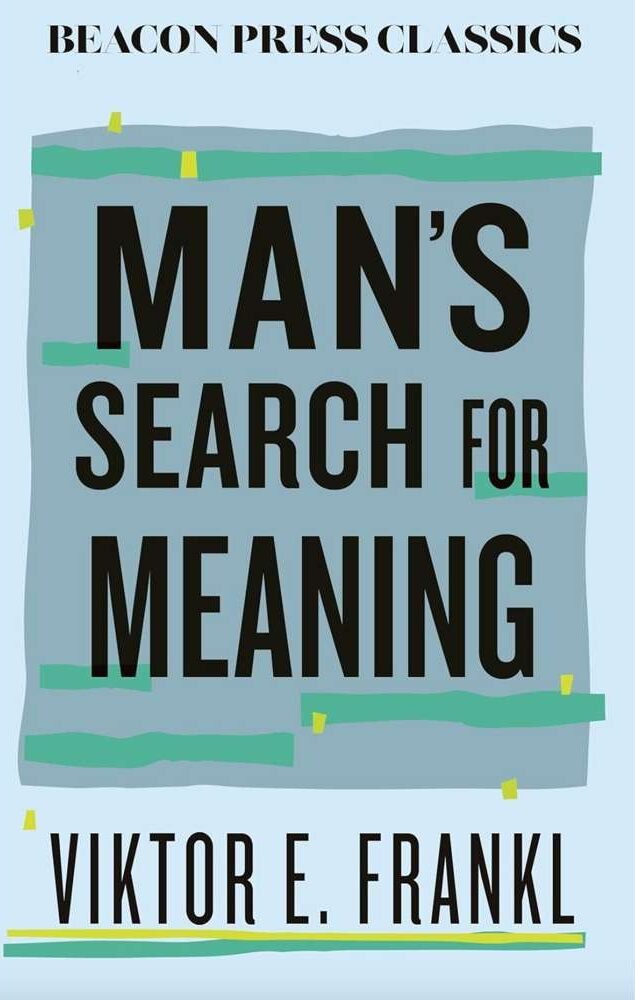
In Man’s Search for Meaning, psychiatrist and Holocaust survivor Viktor Frankl reflects on his experiences in Nazi concentration camps and introduces the principles of logotherapy, an approach to psychotherapy centered on the human search for meaning.
Frankl explores how meaning can emerge through purposeful work, love, human connection, and the attitudes we adopt toward suffering that cannot be avoided.
His work doesn’t suggest that suffering is desirable or that we should accept circumstances we have the power to change. Rather, it considers what remains possible when our freedom to change external conditions is severely restricted.
Why We Recommend It
Man’s Search for Meaning offers a profound exploration of the relationship between circumstances and purpose.
It invites us to consider whether meaning might be found not only through achieving our goals but also through the ways we respond to life as it unfolds.
- It explores sources of meaning beyond material success.
- It recognizes the importance of love and human connection.
- It distinguishes between changing circumstances and choosing how to respond to them.
- It offers a philosophical foundation for navigating unavoidable hardship.
Something to Consider
This book contains deeply distressing historical material related to the Holocaust.
Its central ideas should also be approached with care. Finding meaning in suffering doesn’t make the suffering acceptable, and people shouldn’t feel obligated to transform every painful experience into a lesson.
Sometimes, suffering calls for practical assistance, professional support, social change, or simply compassion.
Where Should You Begin?
Each of these books addresses a different dimension of disappointment, acceptance, and the search for meaning.
The right book for you may depend on what you’re experiencing at this particular moment in your life.
| If You’re Feeling… | Start With… |
|---|---|
| Sad about the life you imagined but never experienced | Bittersweet |
| Exhausted by a long period of struggle or uncertainty | Wintering |
| Unsure of your identity or direction in midlife | Finding Meaning in the Second Half of Life |
| Anxious about passing time and unrealized ambitions | Four Thousand Weeks |
| Constrained by circumstances you cannot easily change | Man’s Search for Meaning |
If you’re struggling to accept the emotional complexity of your life, we’d suggest beginning with Bittersweet.
If you’re searching for a deeper understanding of your purpose and direction, Finding Meaning in the Second Half of Life may be especially valuable.
And if you’re looking for a relatively short but profound exploration of meaning, Man’s Search for Meaning remains a powerful choice.
Acceptance Doesn’t Mean Giving Up
One of the difficulties of accepting our lives is that acceptance can feel dangerously close to resignation.
If we make peace with where we are, will we lose the motivation to change? If we learn to appreciate what we have, will we stop pursuing what we want?
But perhaps acceptance and aspiration don’t have to be opposites.
We can appreciate our home while dreaming of living somewhere else. We can find meaningful moments in our work while searching for a more fulfilling career. We can enjoy our independence while longing for a loving relationship.
We can recognize the beauty of the present without pretending that it satisfies all of our needs.
Some of our dreams may still be worth pursuing. Others may need to change. Some losses may always remain painful, even as new experiences bring joy into our lives.
Acceptance doesn’t require us to make those distinctions immediately.
It simply allows us to acknowledge where we are while remaining curious about where we might go.
Three Questions to Consider
Take a few moments to reflect on these questions, perhaps in a journal or during a quiet walk.
- What part of the life I imagined am I still grieving?Rather than dismissing the feeling, consider what that unrealized dream represented. Was it freedom, love, security, belonging, accomplishment, or something else?
- Which of my dreams are still worth pursuing, even if the path looks different than I expected?Consider whether there are smaller, alternative, or unexpected ways to move toward what matters to you.
- What meaningful experiences are available to me now that I may have been overlooking while waiting for my circumstances to change?This isn’t an invitation to abandon your ambitions. It’s an opportunity to give the present some of the attention you’ve been reserving for the future.
A Pathways of Love Reflection
There is a particular kind of sadness that comes from realizing that effort, determination, and good intentions don’t guarantee the outcomes we hope for.
Life doesn’t always reward us in proportion to what we’ve invested. Some opportunities arrive too late. Some relationships cannot be repaired. Some dreams remain beyond our reach despite years of sincere effort.
Acknowledging these realities is part of living honestly.
But our lives aren’t defined exclusively by the things that didn’t happen.
There are conversations we haven’t had, people we haven’t met, places we haven’t visited, ideas we haven’t explored, and possibilities we cannot yet see.
There are also ordinary moments available to us today, moments of connection, curiosity, beauty, and quiet pleasure. They may not resolve our larger struggles, but they can still be meaningful.
We don’t have to choose between appreciating those moments and continuing to work toward a different future.
Perhaps a meaningful life is one in which we learn to hold both our gratitude and our longing, our acceptance and our ambition, our sorrow and our joy.
Your life may not look the way you once imagined.
And you don’t have to pretend that this doesn’t matter.
But as long as there is life ahead of you, there remains the possibility of discovering something worth loving about it.
Continue Your Journey
Explore more articles and book recommendations on personal growth, emotional well-being, meaningful relationships, and everyday wisdom at Pathways of Love.
If this article resonated with you, consider sharing it with someone who may be navigating a difficult season or wondering what the next chapter of their life might hold.
Sometimes, one of the most meaningful things we can offer another person is the reminder that they aren’t alone in asking these questions.