
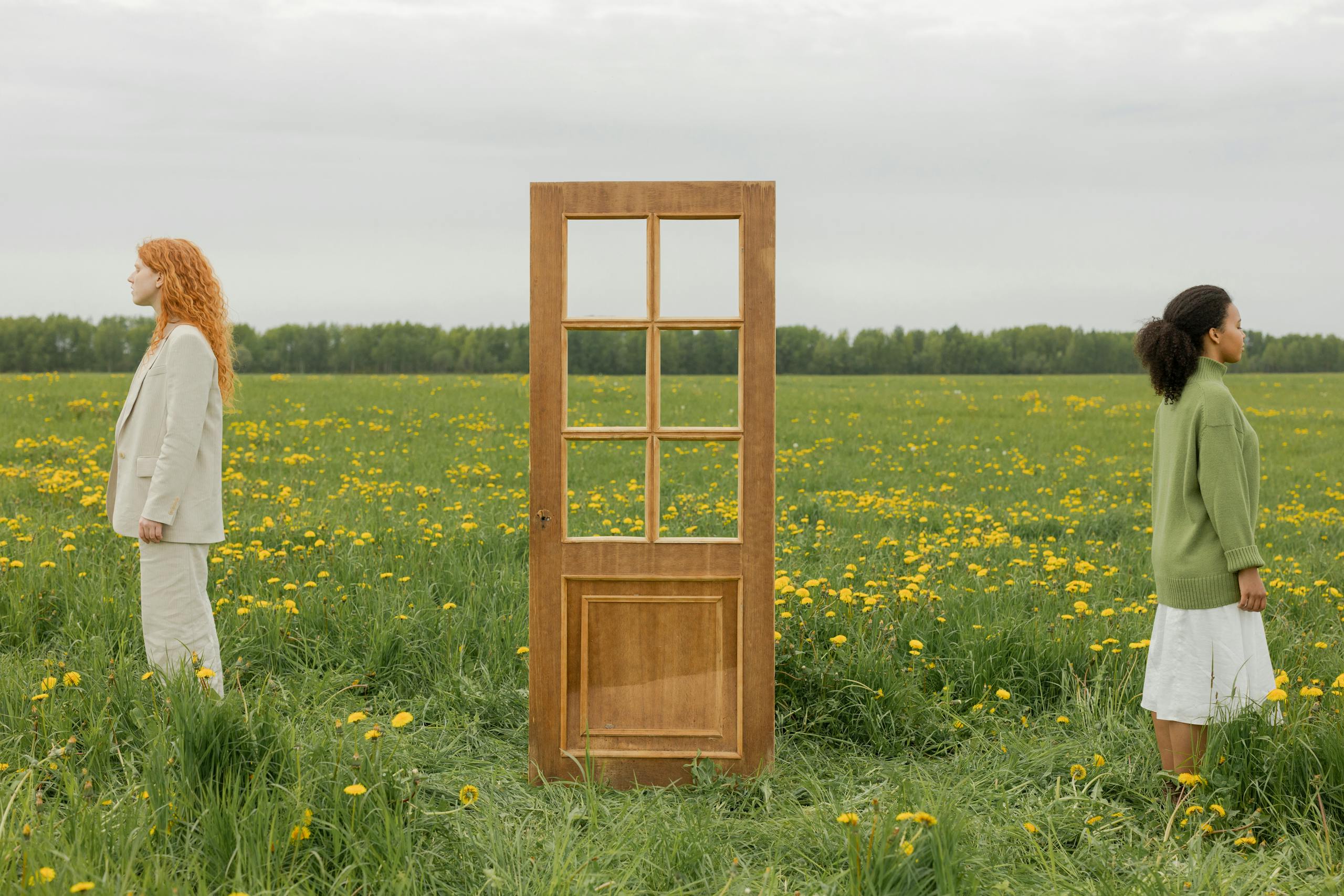
Why We Sometimes Push Away the People We Love Most
People often assume that love naturally creates closeness, yet many relationships contain a strange contradiction that actually pushes people farther away. Sounds weird, but familiar? You may have experienced it yourself or seen it happen to a friend. And, it can be confusing. Here’s how it sometimes works.
First, you feel more connected. The more important someone becomes to us, the more vulnerable we feel. That connection sets the foundation and possibility for all kinds of deeply human experiences together. You want to spend time together. Who do you want to have dinner with? Have long conversations with? Go camping, hiking, a road trip? A comedy show or concert? Psychologist and researcher Brené Brown writes:
“Vulnerability is the birthplace of love, belonging, joy, courage, empathy, and creativity.”
But sometimes, even without thinking about it explicitly, we sense this growing vulnerability in ourselves and it causes us to do the exact opposite of what we actually want. We might…
- pull away
- become distant
- avoid difficult conversations
- stop sharing what we feel
- even build walls when what we really need is connection
Weird, how it sometimes works this way!
Why This Happens
Human beings are a mashup of contradictions and competing desires. Yeah, we’re more complicated than we like to admit. For example, we’re wired for both connection and self-protection. Ideally, these two deeply human needs compliment each other. Ideally, we have people in our lives we know well, trust, and come through for us again and again. However our needs for connection and self-protection can also sometimes compete against each other. Here’s how.
Of course, when relationships feel safe, these needs work together. When relationships feel uncertain, that’s when they can come into conflict. The desire to protect ourselves can become stronger than the desire to connect. Yes, opening our hearts creates the possibility of love, belonging, joy, courage, empathy, and creativity. But, it can also open our hearts to the possibility of rejection, disappointment, or loss.
Common Ways People Create Distance
You may have felt blindsided by a new friend, acquaintance, or lover. Or, you may have even surprised yourself when you start feeling more connected with someone, then strangely, sometimes suddenly, you or the other person start pushing each other away by:
- Becoming emotionally unavailable
- Avoiding difficult conversations
- Withdrawing during conflict
- Criticizing instead of expressing needs
- Staying busy to avoid intimacy
- Pretending they do not care
Often these behaviors are not signs that love, connection, or friendship has disappeared. They may be signs that fear has appeared. It’s weird to think that feeling closer to someone, can spark fear instead. While there may be legitimate reasons why we want to wind down a connection, or just let life take us elsewhere, or we realize that this connection has simply reached its limit or conclusion. Sometimes, we get to know someone and we might now feel safe or we realize we don’t feel like hanging out with them anymore. Or, another person states a new boundary and we have to respect that. It can be that simple and it’s important to listen to our inner voice and the boundaries of others, but here we’re talking about when the situation doesn’t seem to make sense that an otherwise developing connection is somehow driving us or the other person away. It can be a pattern that we can recognize, when we stop reacting, pause, and think.
Understanding the Pattern
When we recognize these behaviors, we have a choice. Instead of reacting automatically and unthinkingly, we can become curious. We can ask ourselves…
- What am I afraid of?
- What am I protecting?
- What do I actually need right now?
- What do I really want?
Awareness often creates the first opening toward healing. Humans behave in patterns often without thinking. Oftentimes, this helps us navigate a complicated world without getting overloaded by it. Have you ever driven somewhere you usually go to, then arrive without remembering the way you took to get there? This is similar to how we navigate our relationships. We do what we do without thinking too much about it. These patterns don’t always work because situations eventually come along that might call for us to do something different. When we start seeing our pattern and that it’s not working this time, we can begin seeing that our current situation is a call to grow into a new way of doing things. Even, new ways of being. Carl Young, the influential psychiatrist, said.
“Until you make the unconscious conscious, it will direct your life and you will call it fate.”
A Different Way Forward
Connection rarely grows through perfection, relying on what we’ve always done, or who we think we have to be. New people and new situations not only provide new opportunities to get to know different people, they provide us an opportunity to see new aspects of ourselves. Connection can force us to be radically honest with ourselves and maybe be a bit more vulnerable with these new connections. Small acts of vulnerability can slowly build trust and closeness. Sometimes saying…
- “I feel scared.”
- “I need reassurance.”
- “This feels weird in a way.”
- “I don’t know how to talk about this.”
…can create more connection than pretending everything is fine. Radical honesty is the practice of sharing what is true for us with courage, compassion, and respect. It does not mean saying every thought that crosses our mind, but rather being willing to reveal our genuine feelings, needs, fears, and experiences instead of hiding behind masks, assumptions, or avoidance. James Baldwin, a writer with great emotional insights said,
“Love takes off the masks that we fear we cannot live without and know we cannot live within.”
While honesty can feel vulnerable, it often creates the conditions for deeper trust and understanding. When people are willing to be authentic with one another, relationships can move beyond surface-level interactions and become places where both people feel truly seen, known, and accepted. Being seen and accepted is not only for our deepest and most important connections, but it can help us set boundaries for various types of relationships in our life. Boundaries that can make our relationships work. And, yes, sometimes setting boundaries through radical honesty can make us realize our relationships actually don’t work. And that’s… actually ok too. In fact, it helps us to move on from relationships that don’t work and may be causing us pain or preventing us from making space for other connections. In this way, radical honesty is not just about telling the truth—it is about creating deeper connections through authenticity.
Final Reflection
Many people are not pushing others away because they do not care. They are pushing others away because they care deeply and do not yet know how to navigate the vulnerability that love requires. Jim Rohn may have said it best.
“The walls we build around us to keep sadness out also keep out the joy.”
What might change in your relationships if you approached distance with curiosity instead of judgment?
Further Reading
Want to learn more about overthinking, self-awareness, emotional regulation, and taking meaningful action? Explore these articles and discover new perspectives.
- Can You Love Someone and Still Know They Are Wrong for You?
- Why We Sometimes Push Away the People We Love Most
- What It REALLY Means to Protect Your Peace
- Why We Misunderstand Each Other So Easily
- 12 Quotes About Listening to Yourself and Discovering What Your Heart Already Knows
- How Do You Know Whether It’s Time to Listen, Work, or Act?
Begin Your Journey of Reflection and Living Powerfully
Receive a free reflection guide to help you better understand yourself, your relationships, and the paths that shape your life.





One Comment
Comments are closed.