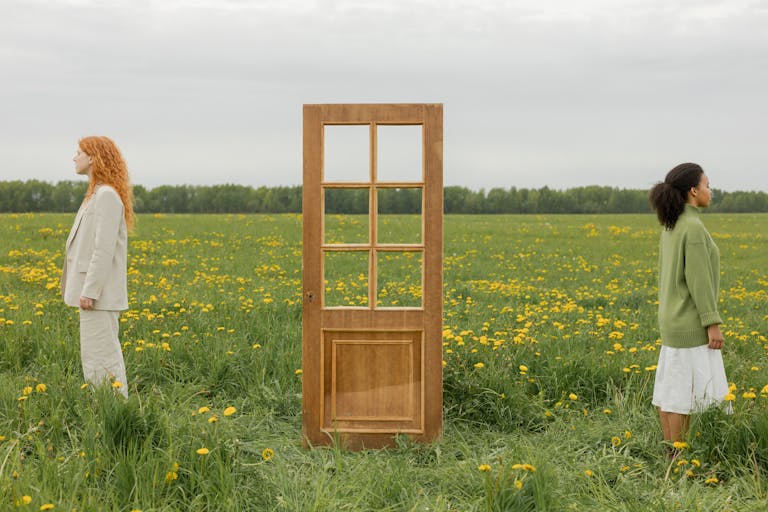

Is It Normal to Outgrow Friendships?
Yes.
And for many people, it is one of the most emotionally confusing parts of adulthood. Friendships often begin because of:
- proximity
- shared life stages
- school
- work
- neighborhoods
- or mutual struggles
It can be strange to think that some of our closest and meaningful friendships happened because, more or less, we just happened to be in the same place for an extended period of time and/or going through similar experiences. But, those friendships are real and meaningful connections. Your friends become your emotional support, your rock, you might even have had a best friend, or friend since childhood, or a friend for many years with whom you’ve both shared treasured memories and carried each other through trying times. Author Virginia Woolf wrote:
“Some people go to priests; others to poetry; I to my friends.”
But as people grow, their priorities, identities, emotional needs, and lifestyles sometimes go in different directions. Outgrowing a friendship does not necessarily mean anyone failed or there is anything wrong with you or the other person. Life happens and seasons come and go. Here’s some reasons why friendships may wind down or even end.
Growth Can Create Emotional Distance
Sometimes one person becomes:
- More or less introspective
- More or less ambitious and career oriented
- More or less emotionally available
- more or less family-oriented
- or more or less focused on healing and personal growth
One person may remain connected to older patterns, habits, or priorities while the other is seeking out new ones. Friendships sometimes shift when the emotional language two people once shared no longer fits who they are becoming. Conversations that once felt energizing may start to feel repetitive or emotionally shallow. Have you noticed yourself changing in ways that affect your relationships? Ways that make your life different than it once was?
Not All Friendships Are Meant to Last Forever
Modern culture often treats ending friendships or allowing them to wind down as failure. But some relationships are seasonal. Certain people help us through:
- specific chapters
- specific identities
- specific struggles
- or specific phases of life.
Writer and philosopher C. S. Lewis wrote:
“Friendship is born at that moment when one person says to another, ‘What! You too?’”
Sometimes friendships fade when that shared “you too’s” and “me too’s” begins fading out until the connection just runs its course. That does not erase the meaning those relationships once held. It doesn’t erase those deep conversations where they “got” you and you felt seen and understood. It doesn’t erase those memorable moments, dinners, birthday parties, camping trips, and concerts. Nor, does it erase those times when you supported each other through hard times.
It might be hard to believe that a friendship can be for a particular time in our lives and that they were part of a particular version of ourselves that we may no longer be. Are there friendships in your life that may have belonged to an earlier version of you? Do you see a different version of you emerging at this moment? Has there been a sudden change in your circumstances that might make you very different than you were?
People Often Feel Guilty About Drifting Away
Many people stay emotionally attached to friendships out of shared history and memories, deep loyalty, or fear of hurting someone. But maintaining closeness out of guilt alone can quietly create resentment or emotional exhaustion. Drifting apart might seem scary or disloyal even a friendship might not otherwise make sense to you. Sometimes drifting away can be painful and not make sense either. When a friend feels that fading connection, it can trigger defensiveness or resentment, but it may be part of how one or both friends are growing apart as their own lives unfold. It’s ok to set new boundaries on an old friendship. Boundaries don’t have to be set from a high and mighty position. In fact, boundaries can be set in a loving way. Psychotherapist Nedra Glover Tawwab writes:
“Boundaries are the distance at which I can love you and me simultaneously.”
Boundaries enable friendships to adapt to current circumstances. Perhaps, a new job, spouse, children, moving to another part of town, or needing to work more hours can make a friendship not work like it used to. In that case, it needs to be recalibrated or redefined which could mean the connection might look a little different or it might even end. In any case, when changes are happening in life and in ourselves, our friendships might change too. And, it’s ok. The alternative is maintaining a friendship that no longer works like it used to our of obligation rather than genuine meaning and connection. Do any of your relationships feel sustained more by obligation than genuine connection?
Outgrowing a Friendship Does Not Erase Its Meaning
A friendship can be real, meaningful, beautiful and still not fit your current life anymore. That does not invalidate what it once gave you. Some relationships are lifelong while others are deeply important for only a chapter as our lives unfold. All those shared experiences are important, but don’t worry about the memory of every word of those deep conversations or every detail or that time at the beach fading away. Even though you may be winding down or ending a friendship for whatever reason, what’s most important is how that connection made us feel. And that is probably the most important treasure we carry with us throughout the rest of our lives. Poet Maya Angelou wrote:
“People will forget what you said, people will forget what you did, but people will never forget how you made them feel.”
Which friendships have changed you, even if they did not last forever? Even friendships that have long since faded away may continue shaping who we are becoming. Feel joy and gratitude for what you continue to carry with you. In a sense, the joy, laughter, solidarity, support, and camaraderie…those feelings never end.
Further Reading
Want to learn more about overthinking, self-awareness, emotional regulation, and taking meaningful action? Explore these articles and discover new perspectives.
- Can You Love Someone and Still Know They Are Wrong for You?
- Why We Sometimes Push Away the People We Love Most
- What It REALLY Means to Protect Your Peace
- Why We Misunderstand Each Other So Easily
- 12 Quotes About Listening to Yourself and Discovering What Your Heart Already Knows
- How Do You Know Whether It’s Time to Listen, Work, or Act?
Begin Your Journey of Reflection and Living Powerfully
Receive a free reflection guide to help you better understand yourself, your relationships, and the paths that shape your life.