Frida Kahlo and Diego Rivera: They Divorced, Then Married Again!
Frida Kahlo and Diego Rivera married in 1929, divorced in 1939, and remarried in 1940. Their story asks what love can and cannot tell us about whether a relationship is right for us.
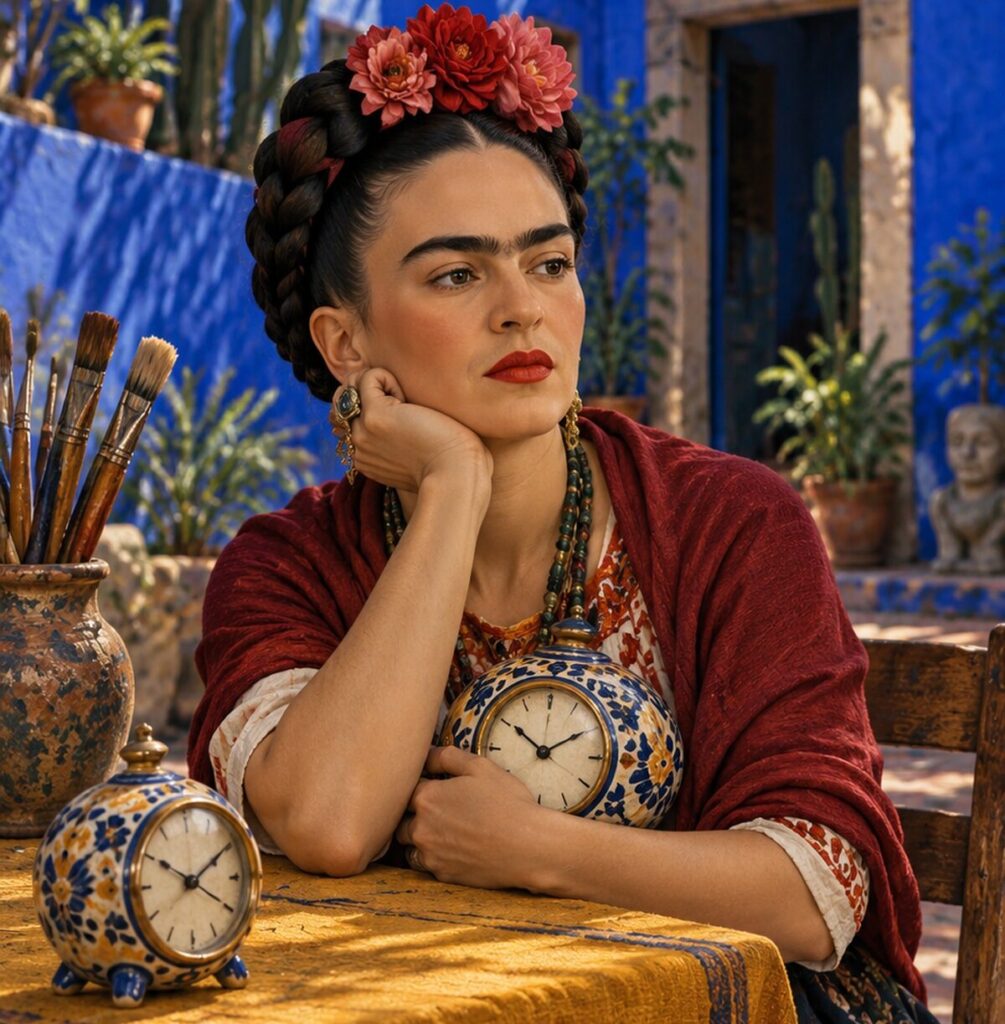
She marked both dates on two ceramic clocks. One recorded when her marriage to Diego Rivera ended in 1939. The other recorded the day and hour they remarried: December 8, 1940, at eleven o’clock. The clocks survive in the Museo Frida Kahlo collection. They are small objects for two enormous decisions.
- It would be easy to turn them into a simple romance: they separated, discovered they could not live without each other, and love won.
- It would be just as easy to turn them into a cautionary tale: the divorce proved the relationship was wrong, and the remarriage was a mistake.
Neither version gives Frida much room to be a complicated person making choices in a complicated life.
What we know is that they were artists and partners whose bond contained admiration, infidelity, conflict, separation, and reunion. Their story invites a harder question:
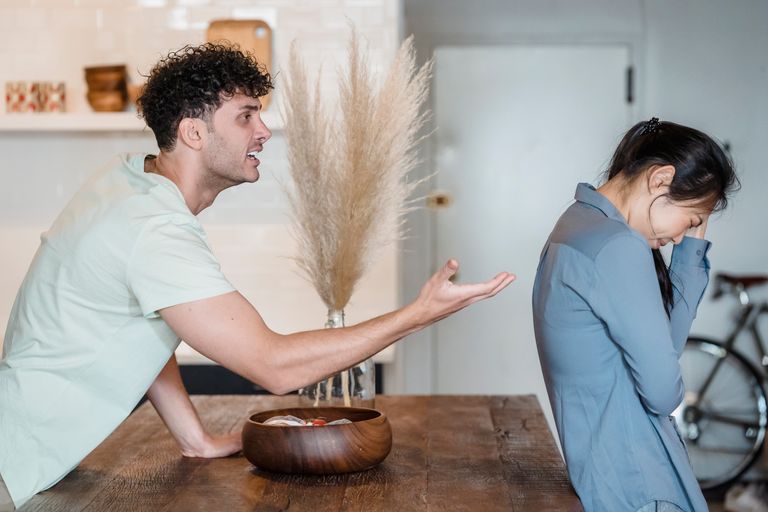
Can love be real when the relationship also causes pain?
Before the clocks
Frida was already painting when she became close to Diego in the late 1920s. He was an established muralist, more than twenty years older. They married at the town council of Coyoacán on August 21, 1929, when she was 22.
Her mother likened the match to an elephant and a dove. The image is memorable, but it can also obscure Frida. She was not simply the small figure next to a celebrated man. She had her own eye, politics, humor, friendships, and ambition. Her first self-portrait predated their marriage, and her artistic life continued to develop through it and beyond it.
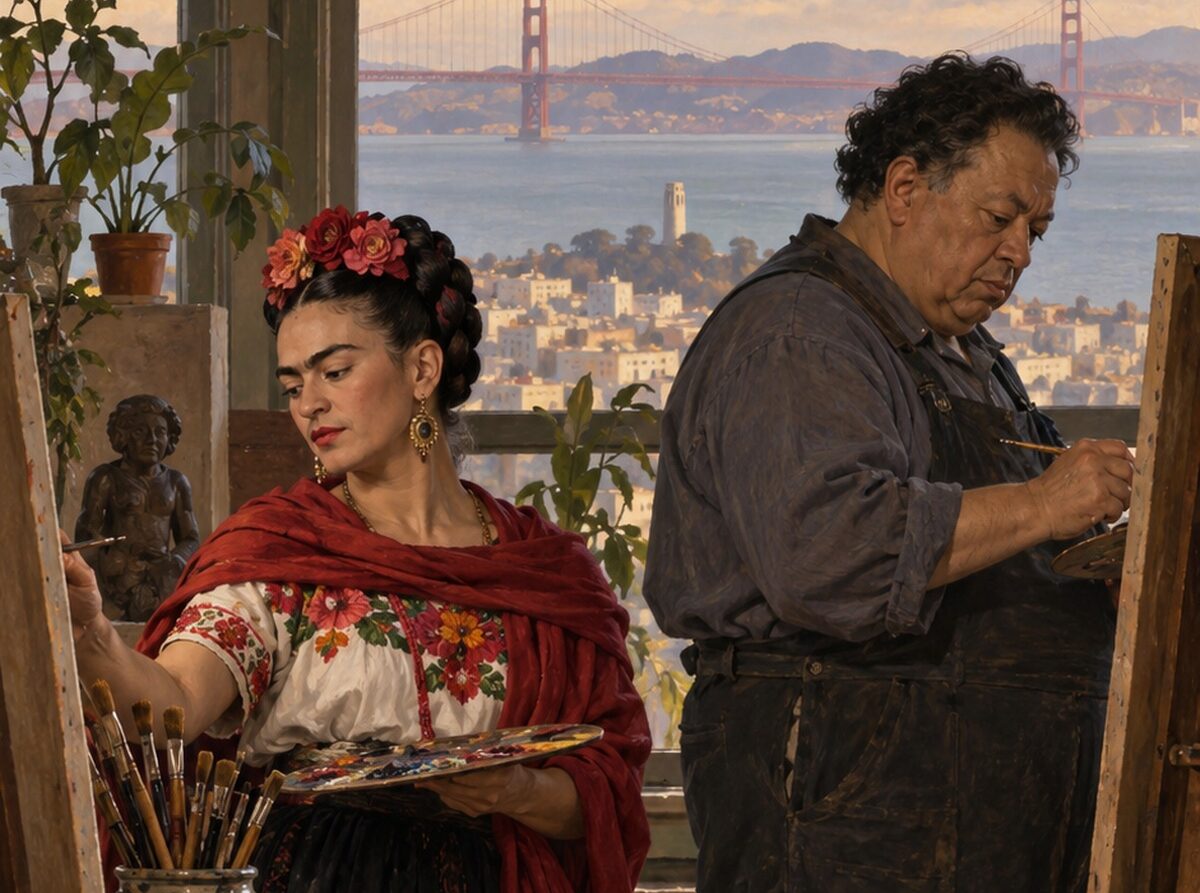
The couple shared an interest in Mexican art and political life. They also moved for Diego’s mural commissions, spending time in San Francisco, Detroit, and New York. In some photographs and accounts of that period, she appears beside a man who was already famous; in her later paintings, she becomes unmistakably the author of her own image.
This is one reason the love story needs two subjects. It was not merely a story about being chosen by Diego. It was also about how Frida understood herself while loving him.
A bridge between two studios
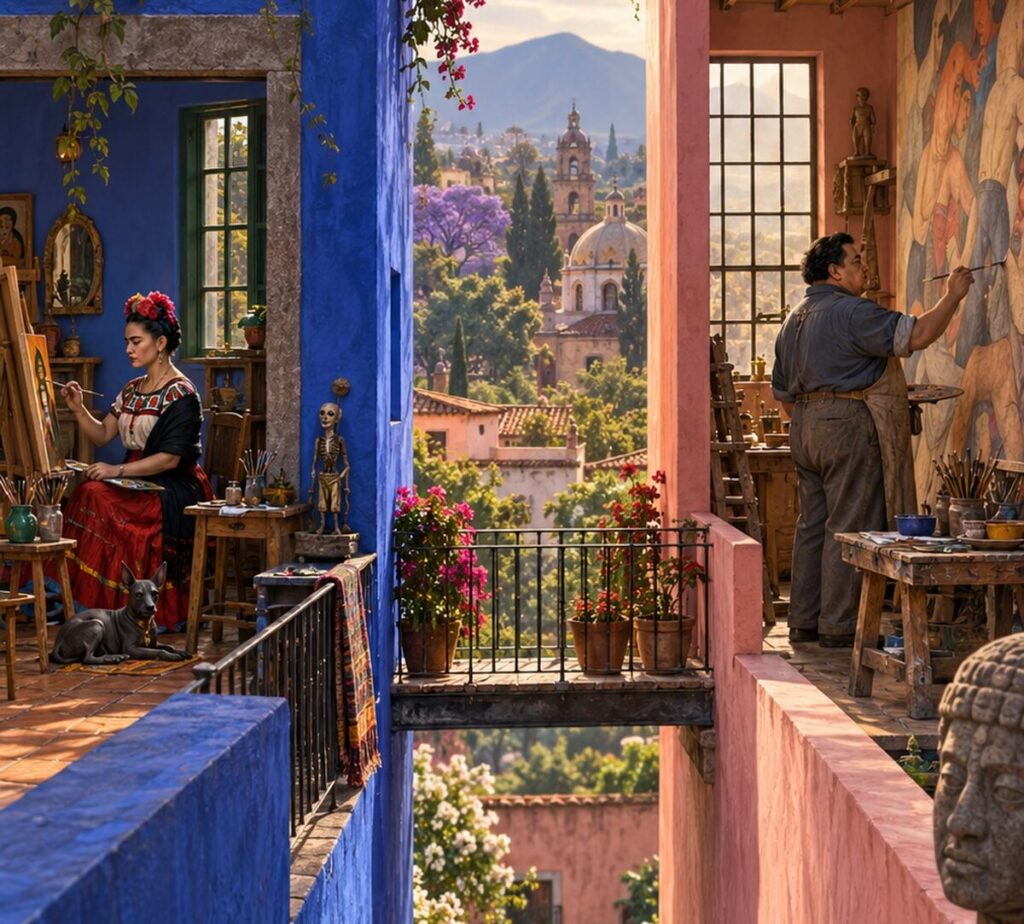
Their San Ángel home offers an unusually clear visual metaphor. It consisted of separate buildings, one blue and one pink, connected by a bridge. Each had space to work. A bridge can suggest closeness, but it also acknowledges the distance between the places it joins.
We should not pretend architecture tells us exactly how a marriage felt. Still, it gives us a useful way to think about two strong creative lives. They influenced each other, but they were not interchangeable. Neither artist’s work can be reduced to a footnote in the other’s biography.
Love sometimes asks two people to move closer. At other times it asks them to recognize where one person ends and the other begins. Separate studios alone cannot make a relationship healthy. They can, however, remind us that intimacy does not require a shared identity.
When admiration was not enough
The relationship included repeated infidelities. The Museo Frida Kahlo biography identifies Diego’s affair with Frida’s younger sister Cristina as especially painful. Frida also had relationships outside the marriage. Accounts that turn her into a passive victim or Diego into the only person with a complicated inner life miss parts of the historical record.
We cannot know every private argument or the exact moment either person decided to leave. We can say that the marriage ended in divorce in 1939. By then Frida’s career had grown: she had held a solo exhibition in New York in 1938 and participated in an exhibition in Paris in 1939.
That same year, she painted The Two Fridas, a double self-portrait often discussed in relation to the divorce. She later made Self-Portrait with Cropped Hair, a striking image of herself in a suit after the separation. The paintings are her art, not a diary entry we can decode with certainty. They do show how deliberately she represented herself during a period of change.
There is a temptation to say that walking away must have meant she no longer loved him. But the end of a marriage is not a reliable measure of whether love existed. Someone may love a person and still be hurt by what happens between them. Someone may need distance before they know what they want next.
The second marriage
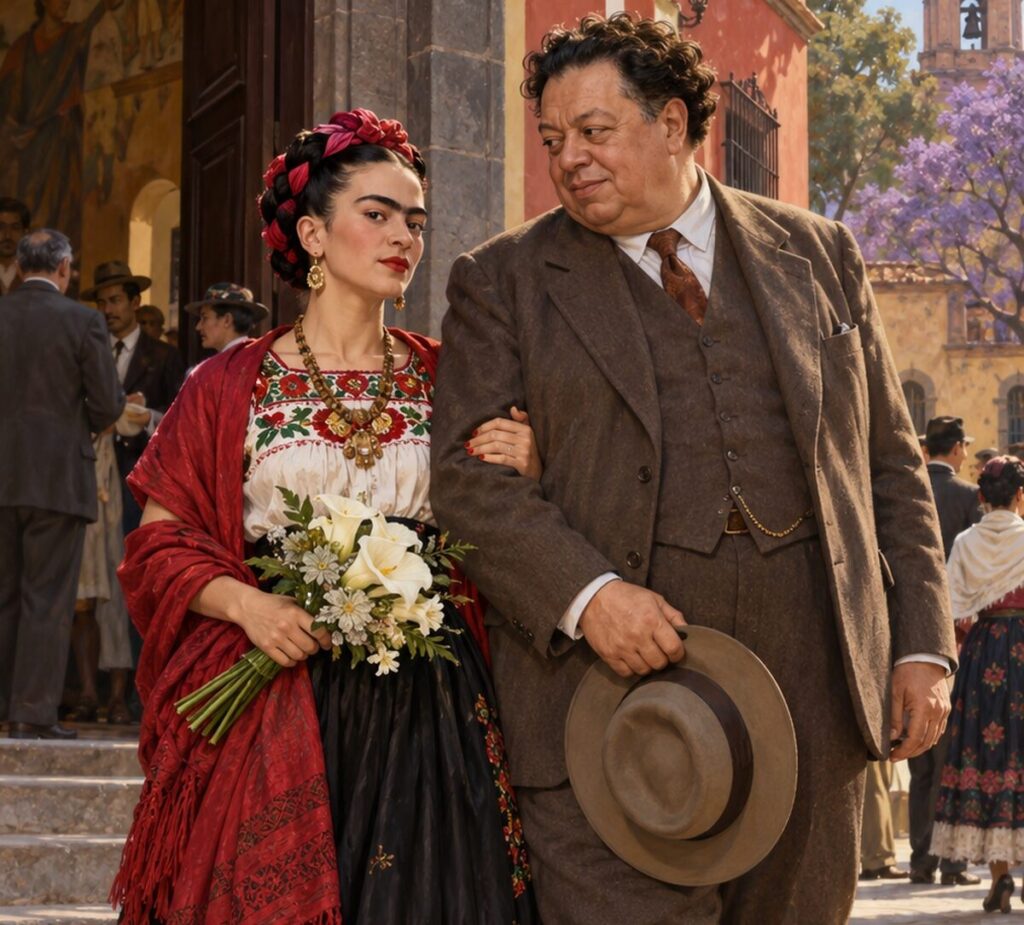
In December 1940 they remarried in San Francisco. The museum describes their renewed life together as more independent. Its biography describes an agreement allowing autonomous romantic lives, though that arrangement had its own tensions.
This detail matters. They did not simply rewind to 1929. A second wedding could not erase the years between the ceremonies. Nor does it prove that the problems had been resolved. It was a new choice, made by two people with more history and different expectations.
Frida’s clocks make that visible. She recorded both the ending and the return. She did not erase the first date to make the second one easier to explain.
Their marriage continued until Frida’s death in 1954. Diego praised her art in public, while her paintings continued to explore identity, pain, culture, and the complicated people in her life. The relationship remained part of her story. It was never the whole of it.
What can we take from their story?
Frida and Diego are sometimes held up as proof that passionate love overcomes everything. They are also used as proof that returning to an ex is always a mistake. Their actual history will not settle either claim for strangers.
The meaningful question is closer to home. When a relationship holds both love and pain, what changes in the everyday life of each person? Can they speak honestly? Are the agreements mutual and sustainable? Does each person have room to remain themselves? What happens after a breach of trust—beyond the promise that it will be different?
Those are questions for any relationship, not a diagnosis of Frida’s. A decision that made sense to her in 1940 is not an instruction for someone facing a different situation today.
The clocks leave us with a more humane thought. A relationship can have a beginning, an ending, and another beginning without becoming a neat lesson. Frida’s choice to return does not cancel the hurt that came before. Her choice to leave does not mean the affection was false. Both decisions belonged to her.
If you have ever loved someone while wondering whether the relationship was right for you, you may recognize the tension. Love is important information. So are trust, respect, safety, freedom, and what actually happens when two lives meet.
Frida and Diego didn’t have Pathways of Love, but you do! Read our reflections on relationships that seem kinda right and kinda not, then you can decide!
Can a Relationship Feel Right and Still Be Wrong for You?
Can You Love Someone and Still Know They Are Wrong for You?
Why We Sometimes Push Away the People We Love Most
And if you are sorting through mixed feelings, begin with a question rather than a verdict:
What does this relationship make possible in my life, and what does it cost me?
Further Reading
Want to learn more about overthinking, self-awareness, emotional regulation, and taking meaningful action? Explore these articles and discover new perspectives.
- Can You Love Someone and Still Know They Are Wrong for You?
- Why We Sometimes Push Away the People We Love Most
- What It REALLY Means to Protect Your Peace
- Why We Misunderstand Each Other So Easily
- 12 Quotes About Listening to Yourself and Discovering What Your Heart Already Knows
- How Do You Know Whether It’s Time to Listen, Work, or Act?
Begin Your Journey of Reflection and Living Powerfully
Receive a free reflection guide to help you better understand yourself, your relationships, and the paths that shape your life.
Editorial Notes: Illustrations in this article are imaginative interpretations of historical people and settings. They are not archival images of specific private moments or copies of Kahlo’s artworks. Sources:
- Museo Frida Kahlo, collection objects — ceramic clocks documenting divorce and remarriage.
- Museo Frida Kahlo, illustrated chronology — marriage, exhibitions, works, separation, and second marriage.
- Smithsonian Magazine, biographical account — San Ángel studios and bridge.
- Museo Frida Kahlo, biographical PDF — affairs, divorce, and terms of remarriage.